
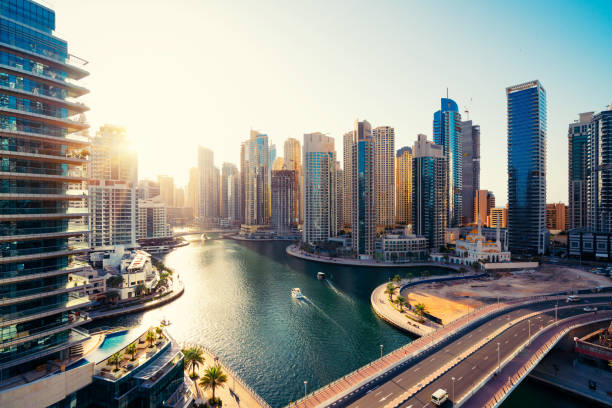
The skyline of Dubai catches the eye first. Shards of glass, steel spires, and waterfront silhouettes look like the future drawn on the horizon. Australians scanning these towers are not only seeing architecture. They are measuring a shift in how and where to hold wealth. As prices rise at home and global links tighten, more investors look outward for their next move.
The decision to explore luxury Dubai properties for Australian investors has little to do with impulse. It grows from research, comparison, and repeated conversations. Developers in Dubai have built a system that welcomes international buyers. Freehold zones, transparent contracts, and online transactions make ownership possible without long stays abroad. This lowers barriers and invites a broader range of participants, from first-time buyers to seasoned portfolio managers.
Inside these towers lies a different proposition than what Australians see in their domestic market. High floors with panoramic views, lobbies designed like private clubs, pools that stretch across rooftops, and gyms rival professional facilities. These spaces act as mini-cities stacked vertically. They let residents work, exercise, entertain, and retreat without stepping outside. This integration reshapes the concept of an apartment into a hybrid of home and service.
Some investors target rental yields. Dubai’s steady influx of expatriates and entrepreneurs sustains demand for upscale housing. Others focus on early entry into off-plan projects, betting on appreciation before completion. The market accommodates both. Buyers can choose between established towers with proven records or new developments promising modern layouts and incentives.
Marketing now stretches across continents. Developers host events in Australian cities, offer live-streamed site tours, and provide financial structures aligned with Australian pay cycles. This global outreach makes distance feel smaller. It also helps buyers compare properties with clearer information and more responsive communication.
Still, location within the city matters as much as the building itself. Districts such as Downtown, Dubai Marina, and Business Bay each attract different tenant profiles and price trends. Understanding these micro-markets helps investors avoid mismatches between expectation and reality. A striking tower may look impressive but underperform if transport or amenities lag behind.
The risks are not hidden. Currency swings can change returns. Rapid construction schedules can create oversupply in certain areas. Regulations adjust as the market matures. Wise investors counter this with diversification, professional advice, and ongoing monitoring. They treat the purchase as an evolving relationship, not a one-off event.
Sustainability now enters the equation as well. High-end buildings integrate smart systems, efficient cooling, and water-saving technology. Australians familiar with environmental standards at home often seek these features abroad. They view them as a sign of forward planning, lower running costs, and long-term tenant appeal. This gives newer, eco-conscious towers a competitive edge.
In essence, luxury Dubai properties for Australian investors represent more than square footage. They embody a link between two very different real estate cultures: one shaped by vast suburban spreads and another by vertical density. By stepping into Dubai’s market, Australians engage with a city in constant motion, where regulations, technology, and urban design evolve at speed.
That link can be practical too. A property here serves as a base for regional travel, a hedge against domestic market cycles, or an entry point into a network of global professionals. It places the investor inside an ecosystem rather than on its edge.
The third attraction lies in how these purchases shape identity. To own part of the skyline signals confidence, not only in Dubai but in one’s own capacity to navigate a complex international environment. It tells clients, partners, or family that horizons can be extended and that opportunity exists beyond familiar borders.
Towers become more than background scenery. They turn into assets, retreats, and markers of a global outlook. In this way, luxury Dubai properties for Australian investors act as gateways not just to high-rise living but to a broader rethinking of what investment can look like in a connected world.