
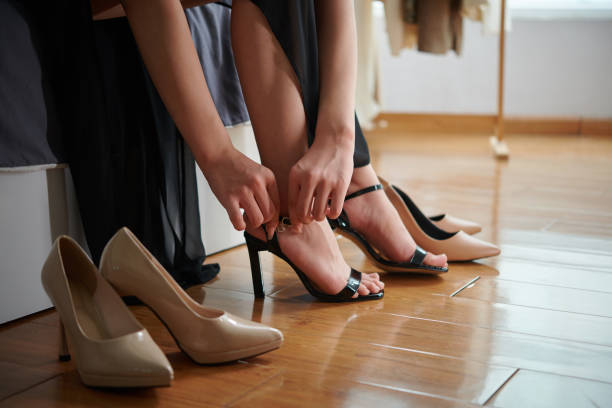
Many luxury shoes fail in the first real hour. They survive the mirror, the soft carpet and the sales assistant’s praise. Then they meet stairs, stone floors, pavements, long greetings and the walk back to the car. That is when the buyer learns whether the pair was made for life or only for looking at.
This is the honest question behind designer shoes: can they look refined and still carry a person well? The answer should be yes, but only if the buyer checks more than the silhouette.
The first check is balance. A shoe may look delicate, but the body should not feel as if it is tipping forward. When the weight falls too much onto the front of the foot, pain usually follows. A better pair lets the wearer stand without gripping the floor with her toes. She should be able to pause, turn and walk again without thinking about each step.
The second check is space. Many people buy the size they wish they were, not the size that lets them move. Toes need room to spread a little. The back should hold without scraping. The sides should not press so hard that the foot feels trapped. A close fit can feel smart. A tight fit often becomes punishment.
Good designer shoes also need a sole that makes sense. Thin soles can look neat, but they may turn every pavement into a message. A slightly stronger base can still look elegant while giving the foot more protection. Grip matters too. A polished floor should not turn a dinner entrance into a balance test.
The third check is how the pair behaves after a few minutes. A shop try-on is too short. Walk, stop, bend one knee, and take a few slower steps. If the shoe already rubs, slips or twists, hope will not fix it. Expensive pain is still pain.
Comfort is not the opposite of beauty. In well-made footwear, comfort is part of the design. It sits in the angle of the heel, the line across the toes, the way the upper holds the foot, and the point where the sole bends. These details rarely make a dramatic sales pitch, yet they decide whether the pair gets worn again.
There is also a question of purpose. A slender evening pair may be right for a seated dinner. It may not be right for a full day in the city. A low block heel may not create the same drama, but it may be the pair that gets chosen again and again. The best wardrobe has room for both, as long as each pair is bought with a clear job in mind.
Shoppers should also think about the surfaces in their own lives. Marble lobbies, train platforms, wet streets and old restaurant floors all ask different things from footwear. A pair that works only in a boutique is not a very useful pair. It may photograph well, but a wardrobe needs more than one good angle. A buyer should also wear the same kind of socks or tights she plans to use later.
The smarter buyer tests designer shoes with a little suspicion. She asks where the pressure sits. She checks whether one foot feels different from the other. She notices if her stride becomes shorter. A beautiful pair should not make her move as if she is protecting a wound.
There is no prize for suffering through footwear. The most elegant person in the room is often the one who can stand naturally, walk without fuss and forget about her feet. Style looks better when the wearer is not negotiating with pain.
That is why comfort and style do not need to fight. They meet when design respects the body. The result is not a compromise. It is a pair that looks good in the mirror and still earns its place after the door opens.